
butiá house
architecture
Makaiba Estúdio
interior design
Makaiba Estúdio


Implanted within a vineyard in Espírito Santo do Pinhal, Casa Butiá is part of a larger ensemble of buildings conceived for the same family on their rural estate. The project emerges as part of a productive and emotional landscape, where architecture, the land, and agricultural cultivation meet.
The house settles gently into the terrain, following the natural topography and opening itself to the wide views of the property. Its curved and continuous roof extends across the entire length of the building, tracing a delicate movement that echoes the surrounding mountain ranges. This structural gesture unifies the different areas of the house and creates a light silhouette on the horizon of the vineyard.

The material palette was designed to reinforce a direct connection with the place. Stone walls and pillars, crafted using artisanal techniques, bring texture and solidity to the architecture. The wood used in the roof and ceilings warms the spaces and reinforces the sense of shelter. Together, these elements reveal a construction process attentive to local knowledge and the use of natural materials, valuing craftsmanship and traditional techniques of the region.
Inside, the house is organized through a sequence of protected courtyards and gardens. These intermediate spaces introduce vegetation, natural light, and ventilation, creating microclimates that ensure comfort and privacy for the bedrooms. At the same time, large glass openings connect the social areas to the open landscape of the vineyard, dissolving the boundaries between interior and exterior.

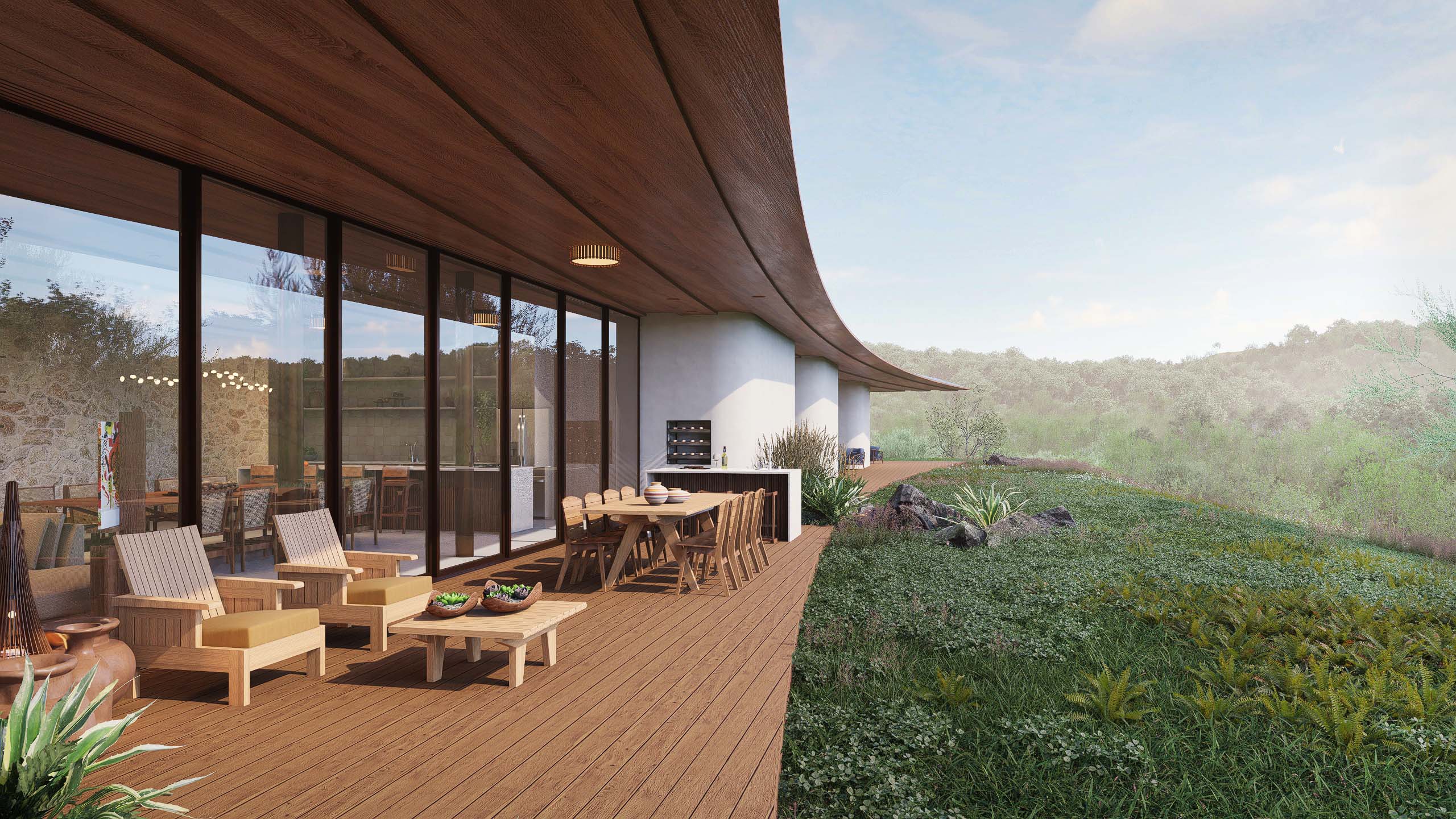

This alternation between openness and retreat shapes the experience of the house: at times contemplative, oriented toward the vastness of the countryside; at others intimate, protected by quiet courtyards and the constant presence of nature.
The result is an architecture that seeks a balance between technique and sensibility. A house defined by the precision of its construction details, but above all by the way it relates to the land—respecting the topography, the vegetation, and the rhythm of rural life.
At Casa Butiá, architecture and landscape become inseparable, revealing a way of living deeply connected to the land and to the passage of time in this place.


